
A promising lead enters your system on a Tuesday. Your team sends over a pricing quote, the prospect asks to touch base next week, and then silence. Two weeks later, a rep remembers to check in, only to find out the buyer signed with someone else three days ago.
This scenario plays out constantly in growing businesses. Teams rarely miss their revenue targets because they lack incoming opportunities. They miss targets because those opportunities get stuck in email threads, forgotten during busy weeks, or mishandled when team members miscommunicate.
When you run sales without a structured pipeline, you operate without visibility. You cannot tell which prospects need a follow-up today, where high-value deals are slowing down, or how much revenue your business will generate next month. Relying on memory, sticky notes, and disconnected spreadsheets is the fastest way to let good leads go cold.
A structured sales pipeline fixes this problem. It maps out your entire sales process from start to finish so you always know where every deal stands. This guide breaks down what sales pipeline management is, why it is critical for your bottom line, and how you can build a system that consistently turns more leads into paying customers.
What Is Sales Pipeline Management?
Sales pipeline management is the day-to-day work of tracking and guiding potential customers as they move from their first contact with your business all the way to a closed deal.
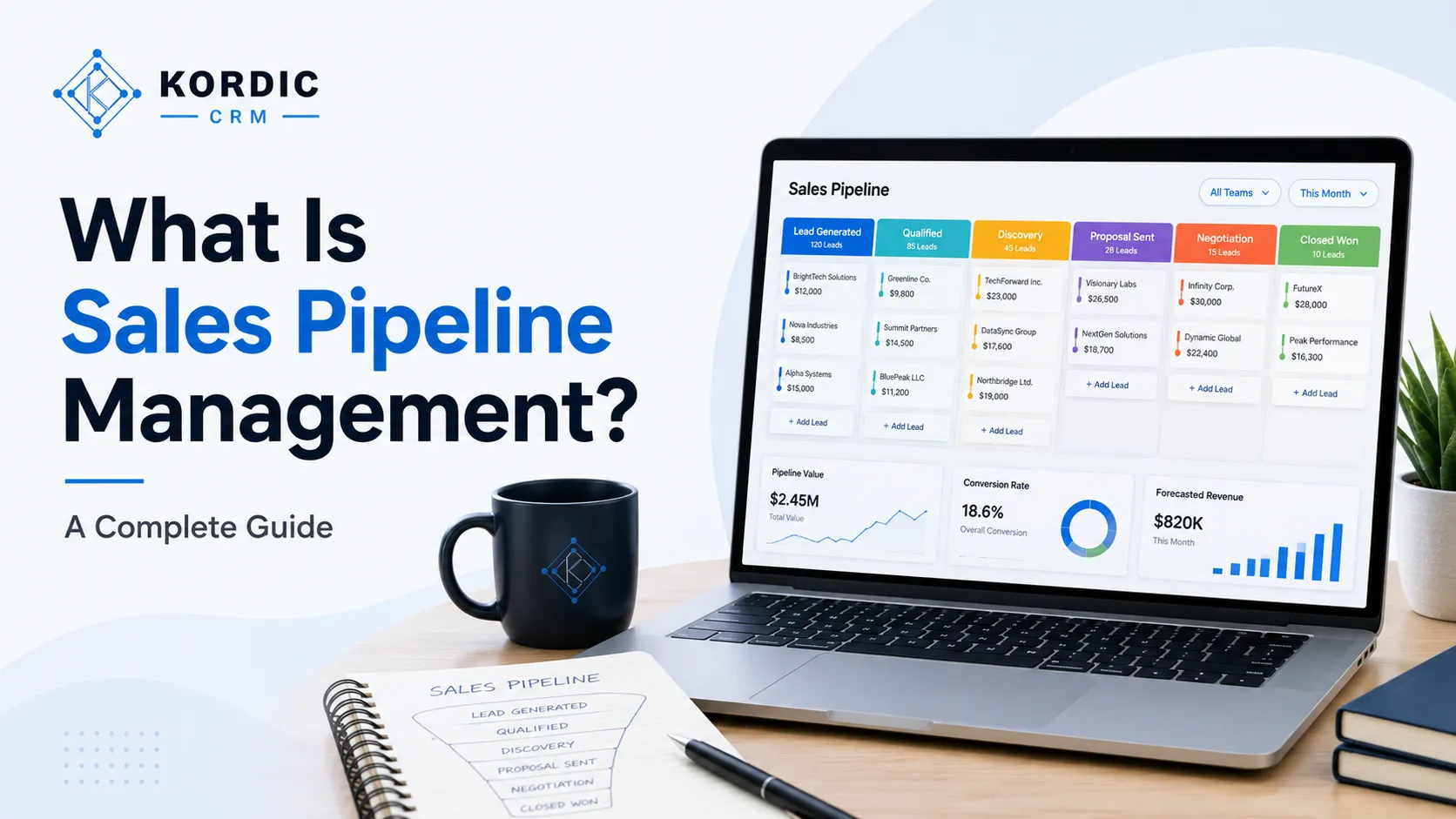
Think of your sales pipeline as a visual map of how you sell. Every prospect sits at a specific spot on that map. Some might just be learning about your product, while others are reviewing a final price quote. Managing the pipeline means watching where every deal sits, spotting any hold-ups, and taking the right action to keep things moving forward.
When you get this process right, it transforms how your team operates:
- Stay organized. All your prospect notes, emails, and phone records live in one central system instead of being scattered across personal notebooks and inboxes.
- Prioritize opportunities. You direct your time and energy toward the leads that are most likely to buy, rather than chasing dead ends or low-value contracts.
- Forecast revenue. You predict future income based on real sales numbers and progress, rather than gut feelings and guesswork.
- Improve follow-ups. You build a reliable routine so no lead gets ignored after an initial meeting or proposal quote.
- Increase conversion rates. You see clearly why deals fall through, allowing you to fix your sales approach and win over more customers.
Why Is Sales Pipeline Management Important?
A well-managed pipeline is the engine behind predictable business growth. When you don't have one, sales reps work in the dark. They react to whatever email pops up first instead of following a deliberate, repeatable strategy.
The data backs this up. According to research from Harvard Business Review, companies with a formal, defined sales process see 28% higher revenue growth compared to businesses with informal structures. Another study by CSO Insights showed that teams actively managing their pipelines achieve win rates that are 15% higher than average.
Here is why a structured pipeline makes such a noticeable difference:
- Better visibility into every deal: Anyone on the team can look at the board and immediately see the health of every active opportunity, including the potential dollar value and expected closing date.
- More accurate sales forecasting: When you know your historical conversion numbers, you can project future income reliably. This makes financial planning and hiring much simpler.
- Improved follow-up consistency: Over 80% of sales require at least five follow-up conversations after the first meeting. Good pipeline management creates a routine so reps never drop the ball.
- Better team accountability: Clear stages remove any confusion over who owns a deal. Everyone knows who is responsible for taking the next step with a client.
- Faster sales cycles: When you track how long deals linger at each step, you spot delays early and figure out how to get buyers to a decision faster.
- Higher conversion rates: When leads get timely, relevant follow-ups at every step, your chances of turning them into paying customers naturally go up.
The Typical Stages of a Sales Pipeline
Every business handles sales a little differently, but most pipelines follow a standard path from initial interest to a signed agreement.
| Stage | Description |
|---|---|
| Lead Generated | A new prospect enters your system through marketing, referrals, or outreach. |
| Qualified | You confirm the lead matches your target customer profile and has a budget. |
| Discovery | You meet with the prospect to understand their problems and needs. |
| Proposal Sent | You share pricing, project scope, or a formal quote. |
| Negotiation | You answer questions, address concerns, and refine contract details. |
| Closed Won | The customer signs the deal and commits to buying. |
| Closed Lost | The deal ends without a sale due to budget, timing, or competition. |
Here is how each stage plays out in real life:
Lead Generated. This is the starting line. A prospect fills out a website form, sends an email, or hands you a business card at an event. You have their name and contact info, but you don't know much else yet.
Qualified. You shouldn't spend hours chasing every lead that comes in. During qualification, you check if the prospect genuinely needs what you sell, if they have the budget to pay for it, and if you are talking to the person who makes the buying decision.
Discovery. Once you know the lead is a good fit, you set up a conversation. You ask questions to learn about their daily frustrations, timelines, and goals. The aim is to figure out how your product or service solves their specific problem.
Proposal Sent. Now you present your offer. You send over a quote, proposal, or presentation that lays out the pricing, deliverables, and terms you discussed during the discovery call.
Negotiation. It is normal for buyers to push back on price or ask for changes to the agreement. In this stage, you work through their objections, answer final questions, and adjust the deal so both sides are happy.
Closed Won. This is the finish line. The contract is signed, the initial payment is recorded, and the prospect officially becomes a new customer. Getting from here to money in the bank is the quote to cash process, and it has its own failure points.
Closed Lost. Not every deal works out. When a lead decides not to buy, you move them here. Tracking lost deals is important because looking at why people say no helps you improve your qualification and sales pitch for the next round.
8 Common Sales Pipeline Challenges
Even experienced sales teams run into everyday roadblocks that cost them money. If you want to fix your sales process, you first need to recognize the most common traps:
- Leads going cold. When reps get overwhelmed with admin work, new leads sit untouched for days. By the time someone reaches out, the buyer has already lost interest or signed with a competitor.
- Missed follow-ups. Without automatic reminders, it is easy to forget about a quote sent last Tuesday or a check-in call promised for next month.
- Poor visibility. When notes and numbers are locked away in individual email inboxes or personal spreadsheets, managers can't see which deals are healthy and which ones are about to fail.
- Duplicate customer information. Having two or three different records for the same person creates confusion. It leads to embarrassing situations where two reps call the same lead on the same day.
- Manual data entry. Forcing sales reps to spend hours typing up meeting notes and logging emails by hand drains energy they should spend talking to clients and closing deals.
- Inaccurate forecasting. Relying on gut feelings instead of real data leads to wild revenue guesses. When forecasts are wrong, business owners can't make smart decisions about hiring or budgets.
- Scattered communication. When client talks happen across emails, phone calls, and WhatsApp messages without being recorded in one place, you lose important details the second a rep goes on vacation.
- No ownership of deals. When multiple people touch an account without one clear person in charge, tasks get overlooked because everyone assumes someone else is handling it.
Best Practices for Effective Sales Pipeline Management
Building a high-performing sales pipeline requires clear processes, consistent daily habits, and a focus on data. Use these foundational best practices to keep your pipeline clean and profitable:
Define Clear Sales Stages
Ensure every member of your sales team agrees on what defines each pipeline stage. Establish specific objective criteria that a prospect must meet before moving forward. For example, a deal should never move to "Proposal Sent" until a formal pricing document is delivered and confirmed received.
Follow Up Consistently
Create a disciplined follow-up routine. If a prospect asks to revisit a conversation in two weeks, schedule a strict calendar task immediately. Consistent, professional follow-up builds trust and keeps your brand top of mind when the buyer is ready to commit.
Prioritize High-Value Opportunities
Not all deals deserve equal attention. Train your team to focus their energy on high-value accounts with high close probabilities. Review deal sizes, lead engagement, and timeline urgency to direct daily efforts toward the revenue that matters most.
Review Your Pipeline Regularly
Conduct weekly pipeline review meetings with your sales team. Look at stagnant deals, identify stalled negotiations, and brainstorm strategies to revive inactive accounts. Regular audits prevent dead leads from artificially inflating your sales projections.
Use Data to Make Decisions
Track your key conversion metrics. If you notice that 60% of your deals drop off between the Discovery and Proposal stages, you know your team needs better discovery call training or clearer initial pricing discussions.
Track your pipeline conversion rates stage by stage, not just your overall win rate. A drop-off between two specific stages tells you exactly where to focus your coaching effort.
Automate Repetitive Tasks
Remove manual administrative burden wherever possible. Let software automatically log email threads, schedule follow-up reminders, and flag inactive accounts so your reps can focus 100% of their attention on selling.
Keep Customer Information Updated
A pipeline is only as reliable as the data inside it. Make it a mandatory rule to update contact details, payment statuses, and meeting notes immediately after every client interaction.
How CRM Software Improves Sales Pipeline Management
Trying to run a growing sales team on spreadsheets usually turns into a mess. Spreadsheets don't remind you to call a client, they don't track your emails, and they break down as your team gets bigger.
This is where Customer Relationship Management (CRM) software comes in. Modern CRM software makes managing your pipeline easier by putting all your customer details, messages, documents, payments, and reports into one centralized system. Instead of jumping between your email inbox, a spreadsheet, messaging apps, and accounting tools, you get the entire picture in one view.
A good CRM gives you practical features that simplify daily sales work:
- Visual pipeline boards. You get a clean Kanban board where you can drag and drop deals from stage to stage, making it easy to see where every opportunity stands.
- Automated reminders. The system alerts you when follow-ups are due or when a lead hasn't been contacted in several days.
- AI-generated insights. Smart AI tools can read through deal notes and generate quick summaries or talking points before you jump on a sales call.
- Analytics dashboards. You can check win rates, team performance, and monthly revenue trends in real time without having to build complex chart formulas.
- Email integrations. Connecting your Gmail or Outlook account ensures every email sent and received is saved to the client's profile automatically.
- Payment tracking. Built-in financial tools let you log customer payments and invoices alongside the deal, keeping sales and accounting on the same page.
Choosing the Right Sales Pipeline Management Software
Picking the right software is a big decision for any sales team. When you are looking at different options, focus on tools that offer these core strengths:
- Easy to use. The platform should feel straightforward from day one. If a tool requires a six-month training manual, your team simply won't use it.
- Custom pipelines. You need the freedom to create stages and tags that match the precise steps of your specific sales process.
- Team collaboration. Look for software that lets sales reps, managers, and accountants work together smoothly with clear permission roles.
- Reporting. Visual dashboards should give you instant answers about your pipeline health, projected revenue, and sales speed.
- Automation. The tool should handle routine jobs like lead assignment, task reminders, and inactivity alerts on its own.
- AI capabilities. Having built-in AI to summarize client histories and prepare meeting notes saves your reps hours of preparation every week.
- Integrations. Make sure the software links natively with the tools your team already uses every day, like Gmail, Outlook, and WhatsApp Business.
- Scalability. Choose a platform with clear, transparent pricing that can grow with your business without hitting you with surprise costs down the road.
Conclusion
Sales pipeline management is about much more than just keeping tabs on open deals. It is about building a reliable, repeatable sales process that gives your team total visibility, better communication, and predictable growth year after year.
When you set up clear stages, stick to daily follow-up habits, and use the right software to manage the workload, you stop losing deals to disorganization and start closing at a much higher rate.
These same principles apply industry by industry. If you are managing real estate leads, the stages and follow-up discipline look a little different, but the underlying structure is identical.
If you are looking for a CRM that combines visual pipeline boards, AI-powered pre-call briefings, WhatsApp integration, and built-in payment tracking in one simple platform, explore how Kordic can help your sales team stay organized and close more deals.