
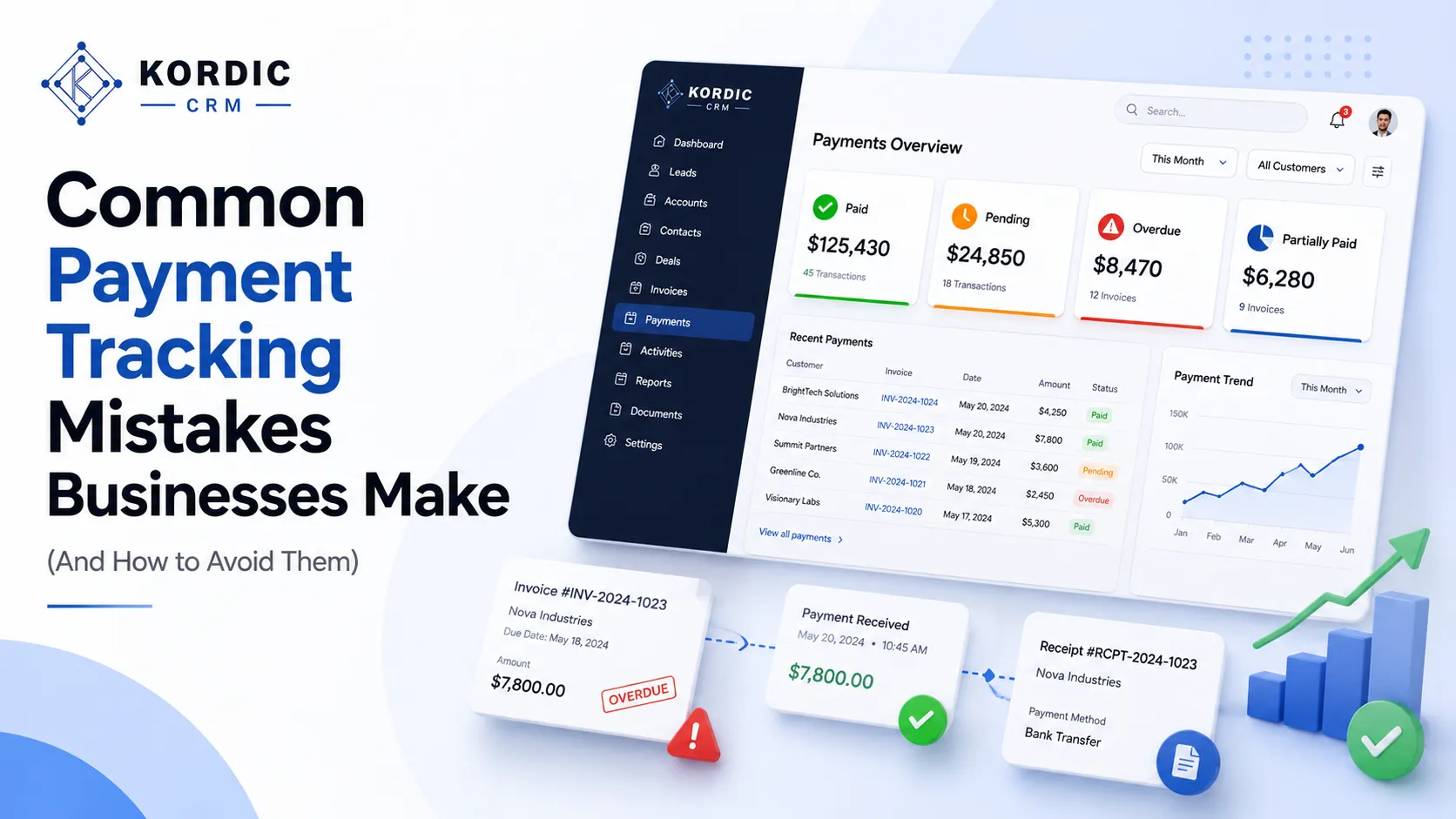
Getting paid is one of the most important parts of running a business, yet many companies still rely on spreadsheets, email chains, or handwritten notes to keep track of customer payments.
While this may work for a small number of transactions, it quickly becomes difficult to manage as your customer base grows. Missing payment updates, recording incorrect amounts, or losing important documents can lead to cash flow issues, accounting errors, and unnecessary delays.
Payment tracking is about maintaining accurate records, keeping sales and finance teams aligned, and making sure every transaction is easy to verify.
In this guide, we'll look at six common payment tracking mistakes businesses make and how you can avoid them.
Mistake #1: Relying Too Much on Spreadsheets
Spreadsheets are often the first tool businesses use to record customer payments. They're familiar, inexpensive, and easy to set up. However, as your business grows, they become increasingly difficult to manage.
Multiple employees may edit different versions of the same file, formulas can break, and manual updates increase the risk of mistakes. Even something as simple as entering the wrong amount or forgetting to save changes can lead to inaccurate records.
Imagine your sales team marks an invoice as paid in one spreadsheet while the finance department continues using an older version. The customer may receive another payment reminder despite having already paid, creating unnecessary confusion.
How to Avoid It
As payment volumes grow, it's important to move away from manual spreadsheets and use a central system that updates records in real time. Everyone involved in the payment process should be working from the same information, reducing errors and improving collaboration.
Mistake #2: Poor Communication Between Sales and Finance
Sales and finance teams often rely on different tools to manage their work. Without proper communication, payment updates can easily be missed or misunderstood.
For example, a salesperson may assume a customer has completed payment after receiving a verbal confirmation, while the finance team is still waiting for the transaction to clear. The customer then receives an overdue payment notice, creating frustration and reducing trust.
How to Avoid It
Create a workflow where both departments have access to the same payment information. Keeping payment records in one shared platform helps everyone stay aligned and prevents conflicting updates.
Mistake #3: Waiting Too Long to Follow Up on Outstanding Payments
Many businesses delay following up on unpaid invoices because they don't want to appear pushy. Unfortunately, the longer an invoice remains unpaid, the less likely it is to be settled quickly.
Late payments can affect cash flow, delay supplier payments, and make it harder to plan future business expenses.
How to Avoid It
Develop a consistent follow-up process for overdue invoices. Automated reminders, scheduled payment reviews, and clear communication help businesses collect payments more efficiently while maintaining professional relationships with customers.
Stale invoices behave like stale leads: the longer they sit untouched, the colder they get. Flag anything unpaid past 7 days automatically instead of relying on someone to remember.
Mistake #4: Recording Payment Details Incorrectly
Manual payment tracking often leads to simple but costly mistakes. Recording the wrong amount, selecting the wrong customer, forgetting to account for VAT, or marking an invoice as fully paid instead of partially paid can create accounting issues that take time to resolve.
Even small errors can affect financial reports and make month-end reconciliation more difficult.
How to Avoid It
Use a structured payment recording process with verification steps before payments are confirmed. Regularly reviewing payment records also helps identify errors before they become larger financial problems.
Mistake #5: Storing Payment Documents in Different Places
Payment tracking involves much more than recording numbers. Businesses also need invoices, receipts, contracts, purchase orders, and payment confirmations.
When these documents are spread across email inboxes, cloud storage, desktops, and messaging apps, finding the right information becomes slow and frustrating.
Imagine a customer asks about an invoice from three months ago. Instead of answering immediately, your team spends valuable time searching multiple systems for supporting documents.
How to Avoid It
Store payment records and related documents together in one secure location. Keeping everything linked to the customer record makes information easier to access and improves both customer service and internal efficiency.
Mistake #6: Having No Approval Process for Payments
As businesses expand, more employees become involved in recording and confirming payments. Without a defined approval process, payment records can be updated without verification, increasing the risk of mistakes and making financial audits more difficult.
Clear accountability becomes especially important when multiple departments handle customer transactions.
How to Avoid It
Introduce an approval workflow where payment records are reviewed before being confirmed. Assign clear responsibilities to sales, finance, and management teams so every payment has an accurate audit trail.
How Businesses Can Improve Payment Tracking
Improving payment tracking doesn't always require major changes. Often, it's about replacing manual habits with more organised processes.
Businesses should aim to keep payment information in one central location, review outstanding balances regularly, maintain accurate customer records, and ensure sales and finance teams work from the same information. As transaction volumes increase, software can also automate reminders, reduce manual data entry, and provide a complete history of every payment.
The goal isn't simply to record payments, it's to create a process that supports better communication, stronger financial control, and a smoother customer experience.
Conclusion
Payment tracking plays a much bigger role than many businesses realise. It affects cash flow, customer relationships, financial reporting, and day-to-day operations.
By avoiding these six common mistakes, businesses can reduce errors, improve collaboration between departments, and gain greater confidence in their financial records.
If your business wants to manage customer payments alongside leads, documents, communications, and sales activities, Kordic brings everything together in one connected platform, making it easier for sales and finance teams to stay aligned.
If you are looking for a CRM with built-in payment tracking, VAT-ready invoicing, stale lead alerts, and shared visibility for sales and finance, explore how Kordic can help your team stay on top of every payment.