
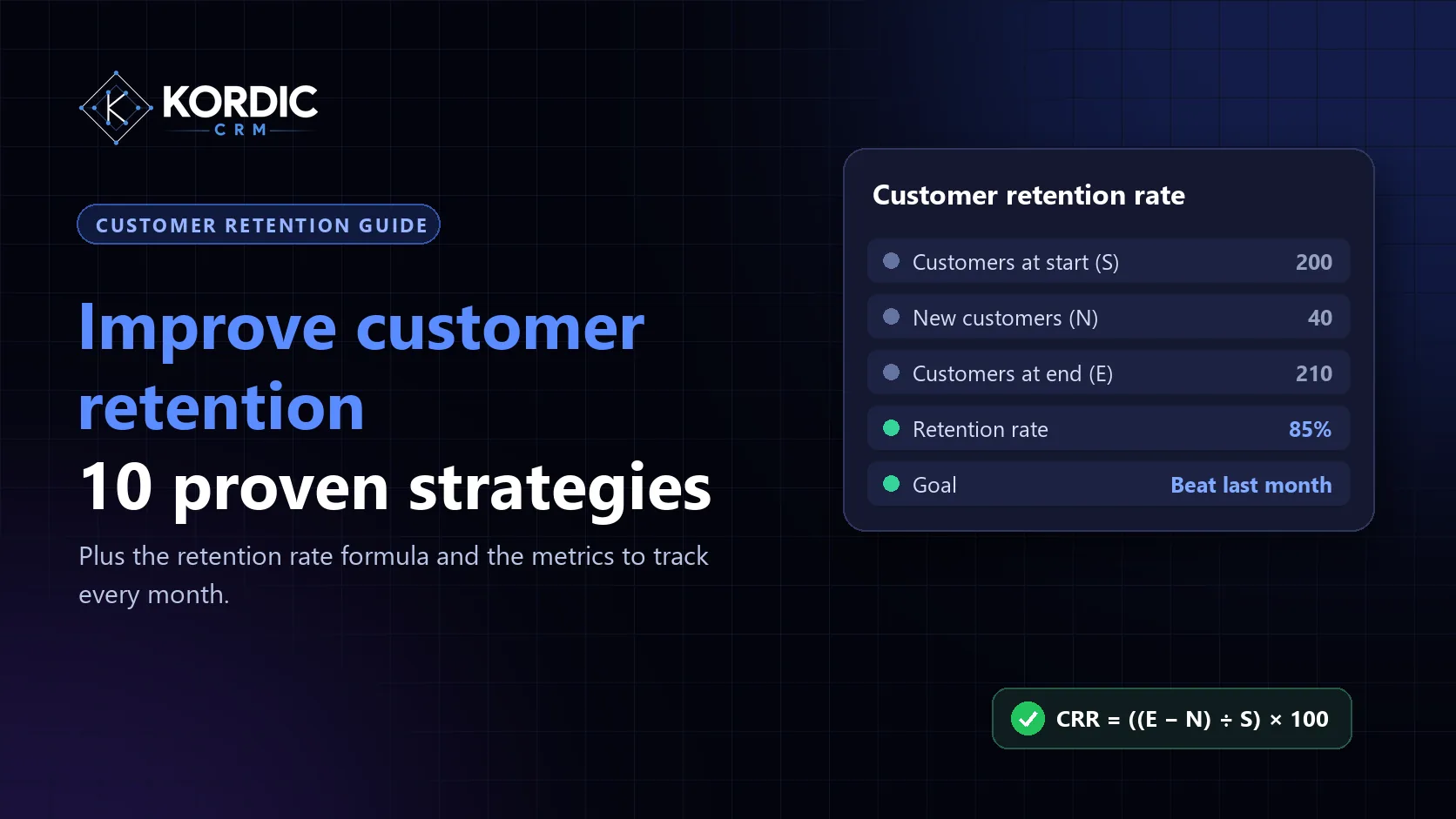
Quick answer: To improve customer retention, onboard new customers well, follow up on a consistent schedule, personalize every conversation, respond fast, ask for feedback, and reward loyalty. Track your customer retention rate monthly with a CRM, so you can spot at-risk accounts before they leave.
Last updated: October 2026 · By the Kordic CRM Team
Why Customer Retention Matters
Keeping customers is cheaper than finding new ones. Acquiring a new customer can cost five to 25 times more than retaining an existing one, according to Harvard Business Review. Research from Frederick Reichheld of Bain & Company also found that a 5% increase in retention can raise profits by 25% to 95%, as Forrester notes.
For small sales teams, that math matters. Every customer who stays reduces the pressure to replace lost revenue with new deals.
10 Proven Customer Retention Strategies
1. Nail Onboarding in the First 90 Days
Most churn starts early. A customer who never sees value in the first few weeks rarely renews. Create a simple onboarding plan: a welcome call, a setup checklist, and check-ins at day 30, 60, and 90.
2. Follow Up Before Accounts Go Quiet
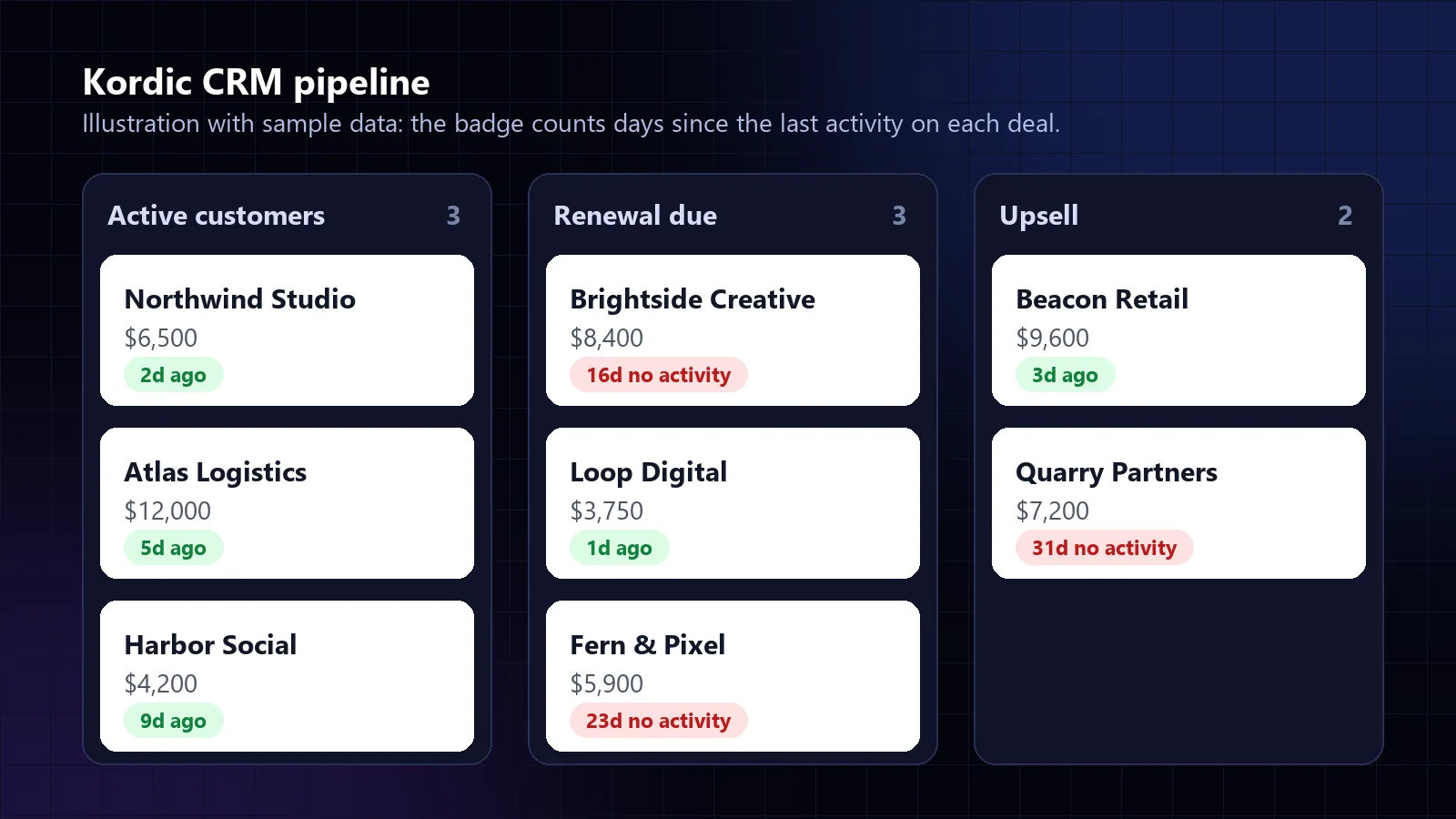
Silence is the earliest churn signal. Set a follow-up cadence for every active customer, not just new leads. Kordic's stale lead badge shows the exact number of days since the last activity on every card, so no account slips through.
3. Meet Customers on Their Preferred Channel
Some customers live in email. Others only reply on WhatsApp. Reaching people where they already are boosts response rates and keeps relationships warm. A WhatsApp CRM keeps those chats tied to the customer record, so anyone on your team can pick up the conversation.
4. Personalize Every Touchpoint
Customers stay with companies that remember them. Use your CRM history to reference past purchases, open issues, and goals before every call. AI tools can now summarize an account in seconds, so reps walk into each conversation prepared.
5. Ask for Feedback and Close the Loop
Run a short Net Promoter Score (NPS) or CSAT survey after key milestones. More importantly, act on what you hear, and tell customers what you changed. Feedback without follow-through hurts trust.
6. Deliver Fast, Consistent Customer Service
Customer service and customer retention go hand in hand. Set response time targets, log every interaction, and make sure handoffs between team members don't lose context.
7. Launch a Loyalty or Referral Program
Customer retention loyalty programs reward repeat business with discounts, perks, or early access. For B2B teams, a referral program often works better: reward customers who introduce you to their peers.
8. Upsell and Cross-Sell at the Right Moment
Offer upgrades only after a customer has seen clear results. Well-timed upsells increase customer lifetime value (CLV) and deepen the relationship. Poorly timed ones feel pushy and drive customers away.
9. Make Billing Painless
Confusing invoices and payment errors quietly drive customers away. Send clear quotes and invoices, confirm payments promptly, and track outstanding balances in one place.
10. Watch for Churn Signals and Run Win-Back Campaigns
Declining usage, slower replies, and missed renewals are warning signs. Flag at-risk accounts early and reach out with help, not a sales pitch. For customers who have already left, a short win-back campaign with a relevant offer can bring some of them back.
How to Calculate Customer Retention Rate
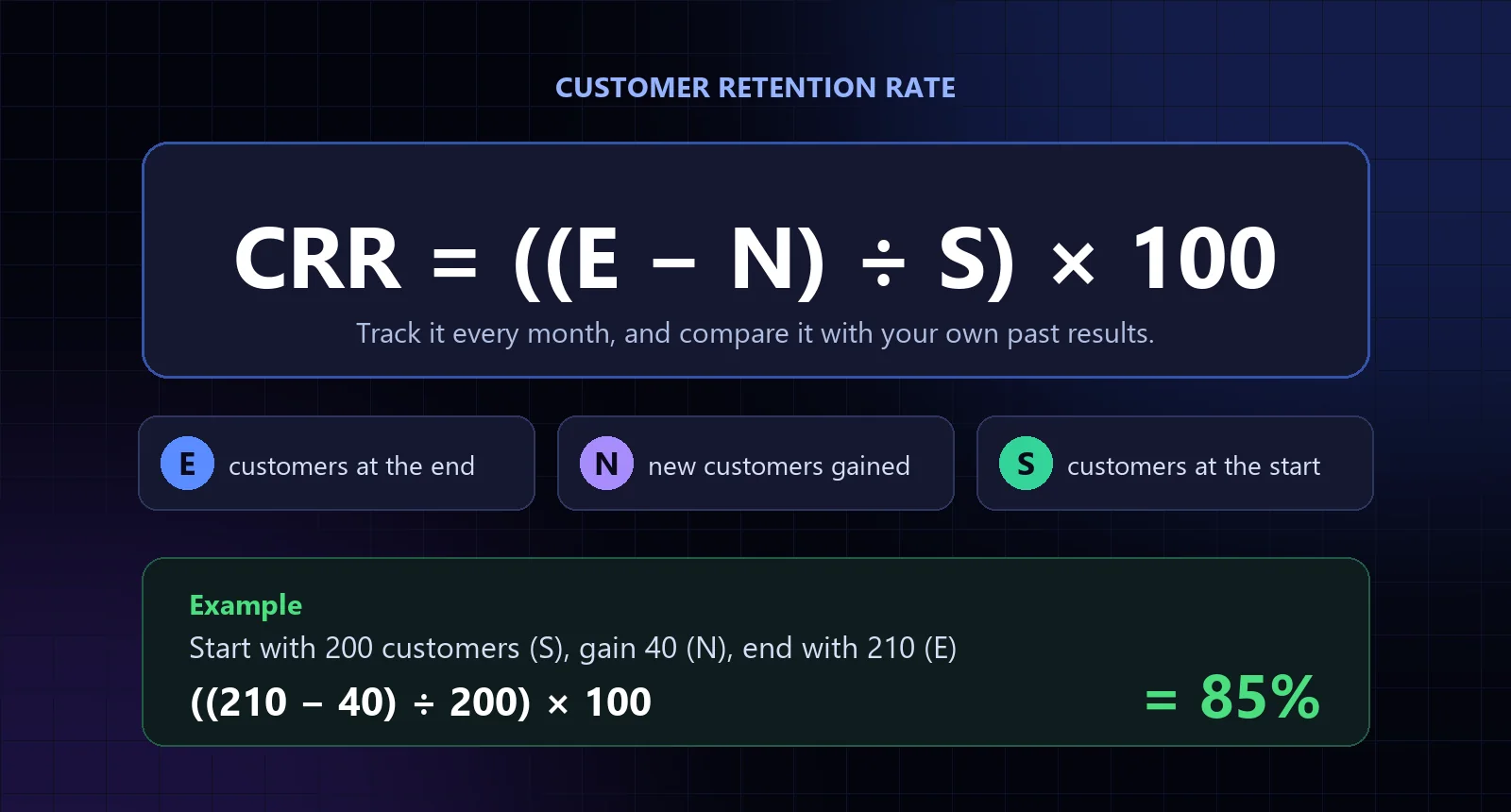
Use the customer retention rate formula:
CRR = ((E − N) ÷ S) × 100
- E = customers at the end of the period
- N = new customers gained during the period
- S = customers at the start of the period
Example: You start the quarter with 200 customers (S), gain 40 new ones (N), and end with 210 (E).
CRR = ((210 − 40) ÷ 200) × 100 = 85%
There's no universal benchmark for a good customer retention rate, because it varies by industry and business model. The best comparison is your own rate over time.
Customer Retention Metrics to Track
- Churn rate: the percentage of customers lost in a period
- Customer lifetime value (CLV): the total revenue a customer brings over the relationship
- Net revenue retention (NRR): revenue kept from existing customers, including upgrades
- Repeat purchase rate: the share of customers who buy again
- NPS or CSAT: how satisfied and loyal customers feel
How a CRM Helps Improve Customer Retention
A CRM turns retention from guesswork into a system. It stores every email, call, chat, and payment in one timeline, reminds reps when accounts need attention, and shows retention metrics on a dashboard. Instead of relying on memory, your team sees exactly which customers need care this week.
Keep More Customers with Kordic CRM
Kordic CRM brings your pipeline, WhatsApp, Gmail, Outlook, invoices, and payment tracking into one place, with stale lead day counters that show exactly who needs a follow-up. Plans start at $4.99 per user, with a 3-month free trial and no credit card required.
Related questions
How can a small business improve customer retention?
What is a good customer retention rate?
How do you calculate customer retention rate?
Is customer retention cheaper than customer acquisition?
How does a CRM help with customer retention?
Which metrics show customer retention?
See how the stale lead badge and payment tracking work in Kordic CRM, or connect WhatsApp with the WhatsApp CRM.